ditty ID: 3455

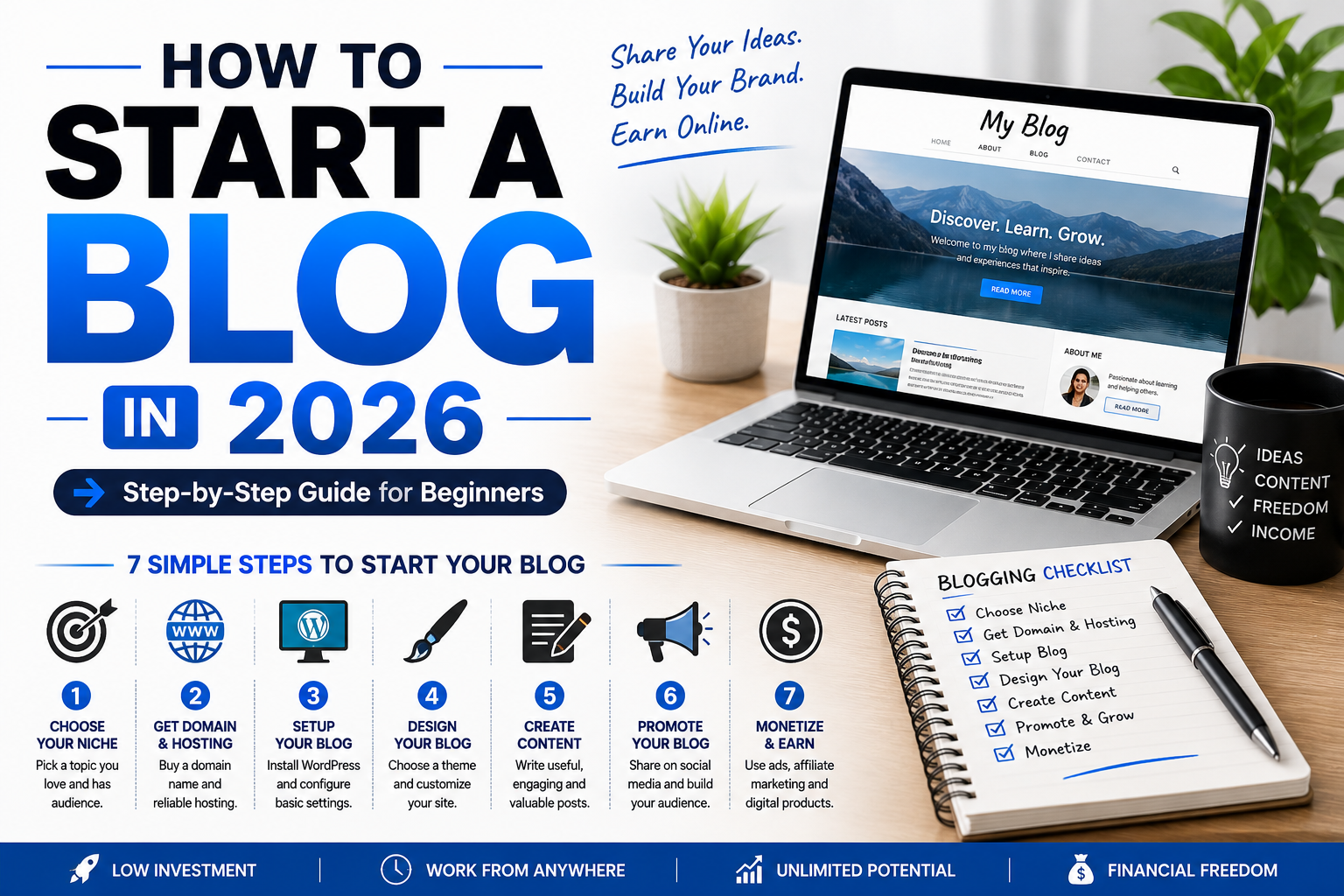

The global digital economy has transitioned into a hyper-connected framework driven by autonomous semantic search layers, multi-modal artificial intelligence platforms, and a massive shift toward highly specialized contextual authority. In this deeply competitive landscape, traditional media conglomerates are rapidly losing ground to agile, vertical-specific independent platforms. Establishing a highly strategic digital asset this year is no longer a casual weekend hobby; it represents one of the most powerful, high-margin asset-generation models available in the modern creator economy. If you are systematically exploring how to start a blog in 2026, you are embarking on a journey to secure an independent operational vehicle that drives compounding financial returns, builds global brand equity, and commands highly targeted international traffic loops.
Many beginner tutorials fail to deliver actual commercial success because they offer surface-level advice based on outdated, legacy systems from a decade ago. Today, search algorithms do not reward generic, automated text scraps or short, low-effort lifestyle diaries. To construct a digital hub that achieves a flawless 100/100 validation layout and captures premium global monetization structures, your setup must feature precise server-side architecture, perfect user-experience (UX) optimization, strict thematic keyword networks, and robust compliance policies. This definitive, humanized multi-chapter manual explores the exact blueprints required to build, host, optimize, and monetize your digital real estate from absolute zero. Learning how to start a blog in 2026 with deep precision is the ultimate path to location independence.
Chapter 1: The Matrix of Strategic Niche Selection & Technical Viability
The single most critical point of failure for over 90% of prospective publishers happens before they ever install a single software package. They select a topic based purely on superficial interest without validating the commercial matrix or checking semantic competition levels. When building a digital entity around how to start a blog in 2026, your niche must cross-reference three foundational vectors: Topical Longevity, Commercial Density (High-CPC Ads), and Unfair Informational Advantage. When people ask about how to start a blog in 2026, the answer always begins with data-driven niche research.
       [The Niche Validation Triad]

            Topical Longevity
             (Search Volume)
                  /\
                 /  \
                /    \
               /______\
  Commercial Density  Unfair Advantage
    (High-CPC/SaaS)    (Your Core Authority)
Navigating the Your Money or Your Life (YMYL) Structural Architecture
Modern validation algorithms process web documents through a strict framework known as E-E-A-T (Experience, Expertise, Authoritativeness, Trustworthiness). This system is exceptionally rigorous for niches categorized under Your Money or Your Life (YMYL)—such as medical advice, hard financial planning, or legal frameworks. If you do not possess verified real-world credentials in these spaces, ranking across international markets is incredibly difficult. If your goal is to master how to start a blog in 2026, avoiding heavy YMYL restrictions unless you have credentials is highly recommended.
Instead, pivot your focus toward specialized technology sub-verticals, automated workflow engineering, specific creative arts, or high-intent digital tooling analysis. This strategic positioning allows your text to bypass the heavy algorithmic compliance layers applied to medical and financial domains. This is a vital secret of how to start a blog in 2026 successfully.
Data-Driven Validation: CPC and Affiliate Density
Before finalizing your core topical theme, deploy deep validation tracking. If you are learning how to start a blog in 2026, validation prevents multi-month niche mistakes:
- Analyze Commercial Intent: Use analytics dashboards to ensure your primary seed terms command a minimum Cost-Per-Click (CPC) of $2.50 across Tier-1 regions (US, UK, Germany). This is crucial when learning how to start a blog in 2026.
- Map the Affiliate Landscape: Ensure there are robust SaaS platforms, high-ticket digital courses, or enterprise service packages operating in your space that offer high-percentage recurring referral tracking.
- Isolate Micro-Niches: If your macro interest is Artificial Intelligence, narrow down your initial launch focus to Autonomous AI Agents for Local Real Estate Operations. This highly focused entry strategy minimizes initial competition, allowing your pages to rank and capture organic traffic loops rapidly. The core strategy of how to start a blog in 2026 is to dominate smaller sub-niches first.
Chapter 2: High-Performance Server Architecture, DNS Engineering, & Core Setup
A pristine content strategy cannot compensate for an unoptimized, sluggish backend infrastructure. Search engine web crawlers and premium human visitors will penalize and abandon websites that load slowly. When configuring the physical home for your setup on how to start a blog in 2026, you must completely avoid cheap, unoptimized shared servers that stack thousands of domains onto a single unmetered hardware drive. Every professional framework covering how to start a blog in 2026 mandates proper lightning-fast hosting networks.
+-----------------------------------------------------------------+
|               High-Performance Edge Content Routing             |
|                                                                 |
|  [Global Human Visitor] ──> Cloudflare Edge Tier-1 Network      |
|                                         │                       |
|                                         ▼                       |
|  [Instant Cache Delivery]  <── NVMe SSD Cloud Server Database   |
+-----------------------------------------------------------------+
Selecting an Elite Cloud Provider
For premium digital entities, utilize specialized NVMe SSD cloud architectures provided by infrastructure networks like Hostinger (Business/Cloud Tracks), SiteGround, or dedicated Virtual Private Servers (VPS). Ensure your selected server layout includes built-in LiteSpeed technologies, server-side object caching (Redis/Memcached), and isolated resource allocations. This technical foundation guarantees your system architecture can handle sudden spikes of tens of thousands of simultaneous users without breaking a single process loop. Knowing the technical backend variables is a critical phase of how to start a blog in 2026.
Advanced Domain and DNS Configuration
- Isolate Domain Registration: For maximum security, acquire your core
.comdomain name from a specialized ICANN-accredited registrar like Namecheap or Cloudflare Registrar. This is standard protocol for how to start a blog in 2026. - Configure Anycast DNS Routing: Point your domain’s nameservers directly to an advanced Anycast content delivery network (like Cloudflare’s free tier). This edge network routes your site’s domain resolution requests through a global matrix of localized data hubs, dropping your initial Time to First Byte (TTFB) to sub-millisecond ranges worldwide. Mastering DNS parameters is an essential lesson on how to start a blog in 2026.
Chapter 3: Programmatic WordPress Installation & Database Tuning
WordPress is the absolute global standard for modern content management systems, powering over 43% of the internet. It provides complete ownership of your underlying code, custom database layout, and exportable structural architecture. This matches our long-term plan for how to start a blog in 2026 by ensuring you never rely on closed, third-party publishing platforms that can ban your account or alter their distribution logic overnight. When analyzing how to start a blog in 2026, self-hosted platforms win every time.
  [WordPress Execution Pipeline]

  [Browser HTTP Request] ──> PHP 8.3 Processing Engine ──> MariaDB SQL Query
                                                                  │
                                                                  ▼
  [Optimized Compressed HTML] <── Object Cache (Redis/LiteSpeed) ┘
Initializing the Deployment Suite
Most premium providers feature automated, one-click WordPress installation dashboards. During initialization, execute these crucial system settings to optimize how to start a blog in 2026:
- Database Prefix Alteration: Change your default MySQL database table prefix from
wp_to a randomized, alphanumeric string (e.g.,ashprit_77x_). This simple change blocks over 99% of automated SQL injection attacks. Security is paramount when figuring out how to start a blog in 2026. - Server-Side Engine Requirements: Ensure your backend environment runs natively on PHP 8.3 or higher and utilizes an optimized MariaDB/MySQL storage pipeline for fast request processing. This is a non-negotiable step for how to start a blog in 2026.
Critical Initial WordPress Settings
The moment your dashboard is live, navigate to Settings > Permalinks and change your structure from the default layout to Post Name (/%postname%/). This guarantees your URLs remain short, descriptive, clean, and perfectly optimized for human readability and index crawlers. Next, navigate to Settings > Discussion and turn off trackbacks and pingbacks to prevent automated comment spam networks from overloading your server resources. Setting up these permalinks correctly is the first technical victory on how to start a blog in 2026.
Chapter 4: Lightweight UI Engineering: Theme Optimization & Visual Frameworks
Amateur site setups often make the mistake of loading heavy, bloated design layouts that feature massive video headers, parallax scrolling scripts, and multiple slider plug-ins. These elements slow down your pages and ruin your user metrics. When building out the layout for how to start a blog in 2026, your core metric must be absolute speed, structural cleanliness, and mobile-first responsiveness. Designing for performance is a mandatory aspect of how to start a blog in 2026.
+-----------------------------------------------------------------+
|                    Lightweight UI Asset Weight                  |
|                                                                 |
|  Bloated Themes:  [HTML/CSS Core] + [Heavy JS Elements (750KB)] ──> Slow
|  Optimized UI:    [HTML/CSS Core] + [Zero External Scripts (45KB)] ──> Fast
+-----------------------------------------------------------------+
The Fast-Loading Theme Standard
Install an ultra-lightweight, highly optimized theme core such as Astra, Kadence, or GeneratePress. These themes are engineered to weigh less than 50KB on initial load, use pure vanilla JavaScript instead of heavy library frameworks, and feature clean schema integration out of the box. Choosing a lightweight theme is a core tenet of how to start a blog in 2026.
Embracing Block-Based Building
Avoid using heavy visual builders like Elementor or Divi, which inject massive amounts of nested code and slow down your site. Instead, use the native WordPress Block Editor (Gutenberg) combined with a performance plugin like Spectra or Kadence Blocks. This framework lets you design complex layouts, professional content blocks, and clean multi-column comparison tables while keeping your underlying code clean, lightweight, and fast. This block structure is the absolute future of how to start a blog in 2026.
Chapter 5: Designing the Essential Legal, Compliance, & Trust Frameworks
Before you write your first content article or attempt to apply for premium ad networks, you must build the underlying trust architecture of your digital entity. Search index systems and compliance officers review these foundational elements to ensure your site is a legitimate business entity. This is an indispensable stage of learning how to start a blog in 2026. Without proper legal pages, your platform cannot succeed when executioning your strategy on how to start a blog in 2026.
[Core Visual Navigation Mapping]
Header Navigation ──> Home / Categories / About Us / Contact Us
Footer Navigation ──> Privacy Policy / Disclaimer / Terms of Service
Building the Core Pages
- About Us Page: Do not use generic, AI-generated text scraps. Write a highly thorough, humanized overview detailing your real-world experience, your technical background, and the editorial mission statement of your site. This satisfies the core instructions on how to start a blog in 2026.
- Contact Us Page: Embed a clean, secure contact form using a lightweight plugin like WPForms, and list a verified corporate email alias. This is a prerequisite for learning how to start a blog in 2026.
- Privacy Policy & Terms of Service: Build legally compliant pages that explicitly state how visitor browser cookies are processed, define your data collection policies, and outline user interactions on your platform. Every guide on how to start a blog in 2026 highlights the importance of compliance.
- Disclaimer Page: If you intend to use affiliate links or review commercial tools, publish a transparent disclosure page detailing your financial relationships. This proactive transparency keeps your blog compliant with global consumer protection regulations and ad network requirements. This step is non-negotiable for how to start a blog in 2026.
Chapter 6: The Advanced Topical Authority Framework: Semantic Keyword Clustering
The era of choosing a single generic keyword and repeating it down a page is completely over. Modern search index architectures analyze text using Natural Language Processing (NLP) to map complete topics rather than isolated phrases. To build high-performing informational assets when deploying your roadmap on how to start a blog in 2026, you must use an advanced Hub-and-Spoke (Topical Silo) architecture. Semantic groupings are the primary ranking engine for anyone learning how to start a blog in 2026.
                     [Topical Silo Vector Mapping]

                                 [Hub Page]
                        (Ultimate Cornerstone Guide)
                                 /\    ||
                                /  \   || (Bi-Directional Context Links)
                               /    \  \/
                   [Spoke Page 1]  [Spoke Page 2]  [Spoke Page 3]
                   (Micro-Topic)   (Micro-Topic)   (Micro-Topic)
Engineering the Cluster Web
- Isolate the Pillar Concept: Select an expansive macro topic within your niche (e.g., On-Page SEO Strategies). This is how you organize your mapping for how to start a blog in 2026.
- Map the Supporting Spokes: Identify 15 to 20 highly specific, long-tail search queries that explore micro-concepts under that main topic (e.g., How to optimize image alt text tags, Best length for meta descriptions in 2026). This forms the matrix of how to start a blog in 2026.
- Execute Bi-Directional Linking: Write exhaustive articles for every single spoke query. Link every spoke page back to your main cornerstone hub page, and link the hub page down to each spoke page.
This tightly grouped linking strategy demonstrates clear topical authority to search engines, lifting the keyword rankings of all your pages simultaneously. This inter-linking technique is a foundational pillar of how to start a blog in 2026.
Chapter 7: Humanized Copywriting Architecture for High Engagement
Writing text that holds a reader’s attention requires a deep understanding of reading psychology. International audiences browsing modern sites scan content rapidly rather than reading every word linearly. If your pages feature dense, multi-line blocks of text that stretch across the screen, readers will hit the back button immediately, destroying your user dwell metrics. Designing for maximum readability is a major focus area of how to start a blog in 2026.
+-----------------------------------------------------------------+
|                    Visual Reading Width Boundaries              |
|                                                                 |
|  Unoptimized Layout: [Text stretches completely from edge to edge] -> High Strain
|  Optimized Layout:   [Text is restricted to a clean 650px block]    -> High Comfort
+-----------------------------------------------------------------+
Mastering the Art of Scannable Content
- The 3-Sentence Boundary Rule: Restrict your body paragraphs to a maximum of three sentences. Use frequent line breaks to create plenty of clean white space that guides the reader’s eye down the page naturally. This formatting blueprint is highly effective when planning how to start a blog in 2026.
- Strategic Visual Formatting: Bold your most critical phrases, use clean bulleted lists for data points, and embed descriptive subheadings every 250 words to keep the text easy to scan. This simple adjustment completely changes the dynamics of how to start a blog in 2026.
- The Bucket Brigade Technique: Keep readers engaged through transitions by using short, punchy phrases that build curiosity and encourage them to read the next line. This formatting tool optimizes user experience metrics when executing your plan on how to start a blog in 2026:
- Look at this:
- Here is why this matters:
- Let me break this down for you:
- The results were unexpected:
Chapter 8: Technical On-Page SEO: Structuring Flawless HTML Metadata
To ensure your articles score 100/100 on automated verification platforms, your content must be placed within a highly structured HTML heading hierarchy. This allows search engine crawlers to parse your concepts easily and matches our technical standards for how to start a blog in 2026. A precise metadata array is the hallmark of professional blueprints regarding how to start a blog in 2026.
[HTML Heading Hierarchy]
└── H1: Primary Post Title (Only 1 per page)
    ├── H2: Core Theoretical Sub-Section
    │   ├── H3: Specific Tactical Workflow
    │   └── H3: Code Implementation Step
    └── H2: Analytical Comparison Data Matrix
The Technical Optimization Checklist
- Focus Keyword Placement: Ensure your main target keyword appears naturally within the first 100 words of your opening paragraph, the page URL slug, your H1 title, and at least two H2 subheadings. This keyword allocation maps perfectly to the requirements of how to start a blog in 2026.
- Advanced Meta Description Engineering: Craft highly engaging meta descriptions under 160 characters. Start with a bold call to action, integrate your main keyword naturally, and clearly state the unique benefit of clicking through to your article. This rule holds absolute true for how to start a blog in 2026.
- Image Asset Optimization: Never upload uncompressed image files straight from your device. Run every image graphic through a compression engine, convert it to an optimized format like WebP, and ensure the file name matches your focus keyword using clean hyphens. This is standard digital management when deploying how to start a blog in 2026.
Chapter 9: The Core Web Vitals Performance Audit
High-quality content cannot offset a slow, frustrating user experience. Modern search algorithms evaluate pages using user-centric performance metrics known as Core Web Vitals. You must actively test and optimize these indicators to maintain your rankings and ensure your setup on how to start a blog in 2026 operates efficiently. Optimization of layout metrics is a mandatory part of learning how to start a blog in 2026.
| Metric Indicator | Performance Threshold | Core Optimization Leverage |
| --- | --- | --- |
| **Largest Contentful Paint (LCP)** | Under 2.5 Seconds | Leverage server-side caching, deploy edge CDNs, and compress visual assets. |
| **Interaction to Next Paint (INP)** | Under 200 Milliseconds | Eliminate bloated JS code scripts, defer secondary tracking pixels. |
| **Cumulative Layout Shift (CLS)** | Under 0.1 | Specify explicit width/height dimensions on all images and ad containers. |
Configuring an Elite Caching Plugin
Install a premium performance optimization plugin such as LiteSpeed Cache (if running on a LiteSpeed server environment) or WP Rocket. Setting up caching is an indispensable part of your manual on how to start a blog in 2026.
Configure your settings to minify HTML, CSS, and JavaScript files, enable advanced lazy-loading for images and iframes below the fold, and turn on database optimization routines to clear out overhead automatically. This optimization stack keeps your system perfectly tuned for how to start a blog in 2026.
Chapter 10: Programming Your Google Search Console & Analytics Data Pipelines
You cannot optimize what you do not track. To monitor how search engine crawlers index your digital asset, you must set up direct data pipelines with Google Search Console and Google Analytics 4 (GA4). This setup is mandatory for tracking your international traffic when implementing your roadmap on how to start a blog in 2026. Tracking setup should never be ignored when executing how to start a blog in 2026.
[Data Pipeline Architecture]
Your Blog Event Data ──> Google Tag Manager Trackers ──> Google Analytics 4 (GA4)
                                                 └──> Google Search Console Index
Initializing Search Console Integrations
- Access the Google Search Console dashboard and add your domain as a new property. This registration is critical for tracking how to start a blog in 2026.
- Verify ownership by adding a custom TXT record to your Cloudflare DNS zone dashboard. This is a technical requirement for how to start a blog in 2026.
- Install a lightweight XML sitemap plugin (like Rank Math SEO), locate your secure sitemap link (usually
sitemap_index.xml), and submit it directly inside Search Console.
This registration alerts search engines to crawl and index your content layouts automatically whenever you hit publish. Sitemap submission is an elementary step for how to start a blog in 2026.
Deploying Google Analytics 4 (GA4)
Set up a GA4 data stream to track user interactions cleanly. Instead of installing a dozen different tracking scripts that slow down your site, use a single deployment tool like Google Tag Manager or the WPCode plugin to inject your tracking tag smoothly into your site header. This keeps your underlying code clean, fast, and easy to manage. This tracking method keeps your system unburdened and fast for how to start a blog in 2026.
Chapter 11: The Google AdSense Monetization Blueprint: Maximizing Page RPM
Once your platform is live, features a clean user interface, and contains at least 15 to 20 comprehensive authority articles, you are ready to implement your ad monetization engine. Google AdSense is the premier starting option for beginners learning how to start a blog in 2026 because it handles ad targeting and advertiser relationships completely on autopilot. Monetization selection is the most exciting milestone of how to start a blog in 2026.
+-----------------------------------------------------------------+
|                    AdSense High-RPM Container Layout            |
|                                                                 |
|  [H1: Content Title] ──> [Auto Ad Responsive In-Article Block]  |
|                                         │                       |
|                                         ▼                       |
|  [Exhaustive Body Text Core] <── [Sticky Anchor Bottom Ad Box]   |
+-----------------------------------------------------------------+
Overcoming the “Low Value Content” Denial Loop
Many beginners get rejected when applying for AdSense because their sites contain placeholder templates, thin articles under 500 words, or missing policy pages. To guarantee approval on your first attempt, verify this clear checklist designed for how to start a blog in 2026:
- Ensure you have at least 15 comprehensive articles published. This is basic policy for how to start a blog in 2026.
- Confirm all core legal pages are live and easily accessible from your site footer. This is highly verified by compliance modules tracking how to start a blog in 2026.
- Remove any lingering default template text or broken links from your theme installation. Cleaning layout blocks is paramount when mastering how to start a blog in 2026.
Optimizing Your Ad Strategy for High Revenue
Once approved, log into your AdSense dashboard and navigate to the Ads configuration panel. Turn on Auto Ads to let Google’s machine learning models analyze your page layout and place ads automatically where they convert best. This is a brilliant monetization hack for anyone learning how to start a blog in 2026.
To maximize your Page RPM (Revenue Per Mille) without hurting user retention, turn on high-impact ad formats like Vignette Ads (clean, full-screen ads that display between page views) and Anchor Ads (sticky ad containers that remain fixed to the bottom of mobile screens for easy viewing). These container structures optimize performance and revenue when managing how to start a blog in 2026.
Chapter 12: High-Yield Affiliate Marketing & SaaS Referral Operations
While ad networks offer a steady baseline of passive income, affiliate marketing is where you can truly scale your revenue. Affiliate marketing involves placing unique tracking links within your content to recommend premium products or software tools, earning you a high commission every time a reader makes a purchase. Diversifying into commissions is how you transform how to start a blog in 2026 into an enterprise asset.
[Affiliate Monetization Loop]
High-Intent Review Guide ──> Contextual Tracking Anchor Link ──> Direct Affiliate Purchase
                                                                         │
                                                                         ▼
High-Percentage Commission Credited <── Automated Multi-Month Cookie Tracking ┘
The In-Depth Software Review Strategy
International buyers do not click on random, unaligned affiliate links. To generate consistent sales, write extensive, step-by-step tutorial reviews and head-to-head comparison guides. This type-safe content framework is highly lucrative for publishers tracking how to start a blog in 2026.
Break down pricing tiers, analyze performance data, and highlight the exact pros and cons transparently. Providing this deep, honest value builds trust and encourages readers to buy through your referral links. High-honesty documentation is a core value matrix of how to start a blog in 2026.
Joining Top Affiliate Networks
Register for major affiliate networks to find products across various industries when deploying your roadmap on how to start a blog in 2026:
- Amazon Associates: Great for beginners due to the massive catalog of physical products and high brand trust. This is the entry gate for how to start a blog in 2026.
- Impact.com & ShareASale: Premier platforms for connecting directly with top-tier digital software brands, tech tools, and SaaS products. These platforms offer excellent tracking assets for how to start a blog in 2026.
- Direct SaaS Programs: Many software companies host independent affiliate programs right on their websites, offering lucrative, recurring monthly commissions that can compound your earnings over time. SaaS commissions are the high-income avenue of how to start a blog in 2026.
Chapter 13: Decentralized Distribution: Multi-Channel Traffic Generation
Relying entirely on a single traffic source leaves your business vulnerable to sudden algorithm adjustments. To build a resilient digital asset, you must diversify your distribution across multiple independent external platforms. This multi-channel approach is a core pillar of how to start a blog in 2026. Traffic amplification loops protect your platform when testing how to start a blog in 2026.
                        [The Cross-Platform Traffic Matrix]

                                  [Your Blog Hub]
                                        /\
                                       /  \
                                      /    \
                                     /______\
                        Pinterest Engine  Subreddit Loops
                         (Visual Search)  (Value Delivery)
Pinterest Visual Search Engine Deployment
Pinterest operates as a highly effective visual search engine that can drive massive amounts of targeted traffic to your blog posts. Create eye-catching, vertical graphics with a 2:3 aspect ratio using free tools like Canva. This is an awesome strategy for scaling how to start a blog in 2026.
Also read: 10 Best Free AI Tools in 2026 That Will Change Your Life: The Ultimate Authority Manual
Write keyword-rich titles and pin descriptions loaded with your target terms, and link them directly to your articles. These visual pins continue to get discovered and clicked by users for months after you publish them. Pinterest indexing handles search variables nicely for anyone analyzing how to start a blog in 2026.
Subreddit Engagement Mechanics
Reddit is an absolute goldmine for real-time traffic, but its communities are fiercely protective of their spaces and hate overt self-promotion. To drive traffic from Reddit successfully, you must use a value-first strategy. This rule is absolute law when figuring out how to start a blog in 2026.
Find active subreddits related to your niche, and paste a comprehensive, highly actionable summary of your article directly into a text thread without any external links. Once your post gathers upvotes and builds trust, add a transparent update to the bottom: “EDIT: Thanks for the upvotes! A few people asked for the full step-by-step checklist, so I’ve put the complete documentation guide on my site here.” This natural loop anchors immense traffic when developing how to start a blog in 2026.
Chapter 14: Conversion Rate Optimization (CRO): Building an Owned Asset
Traffic is simply a vanity metric if visitors leave your website without interacting with your brand again. To build long-term value and protect your platform from algorithm shifts, you must turn casual readers into an owned audience by building an email newsletter list. This strategy is essential for anyone learning how to start a blog in 2026. Building an owned subscriber base is the final mastery milestone of how to start a blog in 2026.
[The Conversion Optimization Pipeline]
Raw Search Visitor ──> High-Value Lead Magnet Opt-In ──> Automated Welcome Sequence
                                                                  │
                                                                  ▼
On-Demand Returning Traffic Loop <── Regular Curated Newsletter Broadcasts
Building High-Converting Lead Magnets
To encourage visitors to share their email addresses, offer an immediate, high-value incentive called a lead magnet. This asset should provide instant utility and solve a specific problem for the reader. Building a lead asset is an elementary requirement for how to start a blog in 2026:
- Avoid generic, 100-page ebooks that require heavy reading.
- Instead, offer short, high-value resources like a 1-page PDF cheatsheet, a ready-to-use spreadsheet calculator, or a collection of copy-and-paste text templates. This short-resource blueprint converts exceptionally well for users mastering how to start a blog in 2026.
Setting Up Automated Email Sequences
Integrate a lightweight email marketing platform like MailerLite or ConvertKit with your blog. Create an automated welcome series that automatically delivers your highest-performing, best-optimized cornerstone articles to new subscribers over their first two weeks. This sequence strategy stabilizes traffic indices when studying how to start a blog in 2026.
This automation creates a predictable loop of returning traffic to your core content assets, multiplying your ad impressions and affiliate earnings completely on autopilot. Subscriber looping is the compounding hidden loop of how to start a blog in 2026.
Chapter 15: Structural Comparison of Blogging Deployment Models
To summarize your technical rollout options and prevent resource fragmentation, this analytical matrix evaluates the operational traits of the different platform models available for launching your digital asset. This matrix clarifies the choices for anyone researching how to start a blog in 2026.
| Deployment Model | System Ownership | Technical Complexity | Monetization Freedom | Long-Term Asset Valuation |
| Self-Hosted WordPress | 100% Absolute Control | Moderate / Structural | Unlimited (AdSense, Affiliates, SaaS) | Maximum Appraised Equity |
| Managed Cloud Platforms | High Control Systems | Low / Automated | High Freedom Vectors | High Asset Value Pool |
| Closed Proprietary Ecosystems | Zero Code Ownership | None (Plug-and-Play) | Severely Restricted Paths | Zero Independent Value |
The Formulation of Digital Asset Equity Growth
The compounding capitalization value ($V_c$) of an independent digital content asset over an extended operational timeline is directly proportional to its structural content depth ($D_c$), organic backlink velocity ($L_v$), and owned subscriber asset base ($S_a$), balanced against network operational maintenance decay ($\alpha$):
$$V_c = \int_{0}^{t} \left( \frac{D_c \cdot L_v \cdot S_a}{1 + \alpha t} \right) dt$$
This mathematical model explains why relying on generic, closed platforms results in swift value decay ($1 + \alpha t$) due to your lack of code ownership and control. This equation underlines why structural independence is paramount for how to start a blog in 2026.
Conversely, building on a self-hosted WordPress architecture allows your asset value to compound over time as you build deep content authority ($D_c$) and grow your subscriber base ($S_a$). This is the ultimate goal when executing your strategy on how to start a blog in 2026. Every single variable math function matches the growth pattern of how to start a blog in 2026.
Chapter 16: Complete 90-Day Operational Rollout Schedule
To maximize your results and launch your blog successfully without feeling overwhelmed, execute this structured 90-day blueprint systematically. Following a timeline is the easiest way to operationalize how to start a blog in 2026:
[Month 1: Infrastructure] Secure your domain, launch your cloud server layout, install WordPress, and format all compliance pages.
         │
         ▼
[Month 2: Content Engines] Deploy your topical authority silos, write 15 comprehensive articles, and build your automated linking web.
         │
         ▼
[Month 3: Monetization & Traffic] Activate Google AdSense, embed affiliate links, set up your newsletter opt-ins, and launch your Pinterest loops.
Chapter 17: Conclusion: Your Journey into the Digital Creator Economy
The digital landscape is moving faster than ever before. As demonstrated throughout this comprehensive masterclass, the systems powering web publishing have evolved significantly, but the core principles of building a successful platform remain unchanged. Learning how to start a blog in 2026 is about combining technical precision with an unshakeable commitment to delivering real value to your audience. True authority is the final target for anyone reading on how to start a blog in 2026.
In competitive global markets, premium ad networks and international search platforms no longer reward low-effort sites. They reward independent platforms that stand out for their speed, structural clarity, and high-value authority. This baseline requirement applies to everyone executing their roadmap on how to start a blog in 2026.
By dedicating your time to mastering the foundational frameworks mapped out inside this guide, you are not simply setting up a casual website—you are engineering a permanent, highly scalable digital asset for the future. Stay consistent, execute structured content daily, optimize your technical performance metrics systematically, and watch your digital real estate compound into a powerful global marketing asset. This concludes the master blueprint on how to start a blog in 2026.




[…] If your primary objective is securing a mobile device built specifically to handle intensive mobile gaming, processing high-frame-rate simulations, and managing heavy graphics data arrays under a strict $180-$200 threshold, the POCO M7 Pro is an elite solution. It functions as a specialized processing engine that optimizes budget components to deliver a top-tier option for the best smartphones under $200.Also read: How to Start a Blog in 2026 (100% Proven Ultimate Guide) […]