Artificial Intelligence is evolving rapidly.
Just a few years ago, most people used AI tools only for answering questions, generating content, or solving simple problems.
Today, things are different.
Instead of asking AI for one response at a time, people are increasingly using AI Agents that can plan tasks, make decisions, use tools, and complete multi-step workflows with minimal human involvement.
This shift is changing how businesses operate, how marketers work, how developers build software, and how creators produce content.
A few months ago, while researching AI, SEO, GEO, and automation systems, I realized that repeatedly switching between tools was consuming a significant amount of time.
Researching topics.
Organizing information.
Creating outlines.
Finding resources.
Managing workflows.
These repetitive tasks added up quickly.
That is when I started exploring AI Agents.
The difference was remarkable.
Instead of completing every step manually, an AI Agent could handle multiple stages of a task, helping automate work that previously required constant supervision.
In this guide, you will learn what AI systems are, how they work, why they matter in 2026, and how beginners can start using them effectively.
Table of Contents
What Are AI systems?
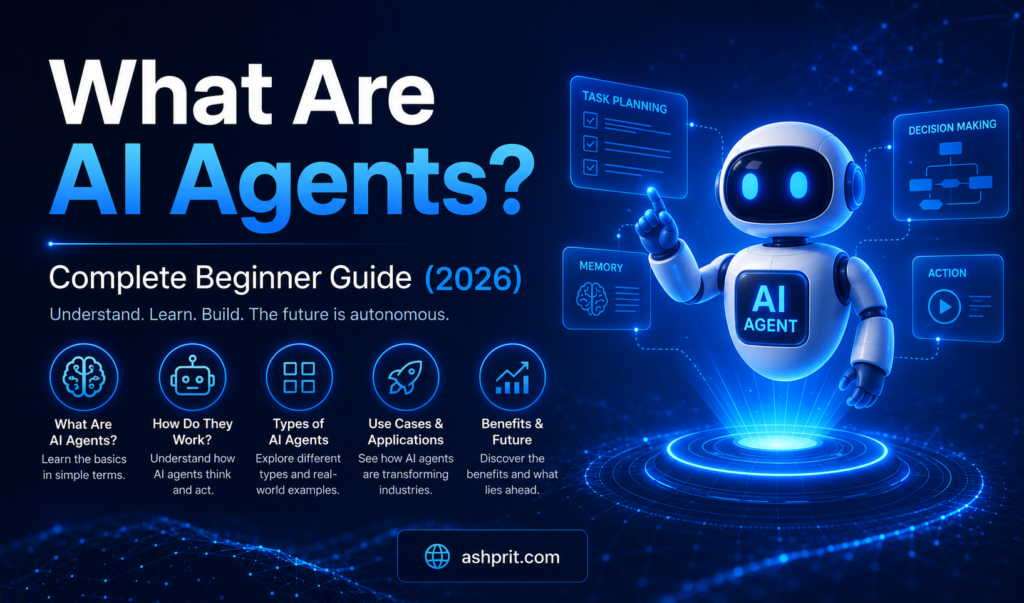
AI Agents are intelligent software systems designed to achieve specific goals by making decisions, planning actions, using tools, and interacting with information.
Unlike traditional AI chatbots that simply respond to prompts, AI Agents can perform tasks that involve multiple steps.
For example, imagine you ask:
“Research the best SEO tools for beginners and create a comparison report.”
A traditional chatbot might provide a list.
An AI Agent can:
- Search for information
- Compare multiple sources
- Organize findings
- Create a structured report
- Suggest recommendations
All as part of a single workflow.
This ability to perform actions rather than simply provide responses is what makes AI Agents powerful.
At their core, AI Agents combine:
- Artificial intelligence
- Decision-making
- Memory
- Planning
- Tool usage
These components allow AI Agents to work toward goals rather than merely answer questions.
Why AI Agents Matter in 2026
The internet is becoming increasingly complex.
Businesses are managing more data.
Creators are producing more content.
Developers are building more sophisticated systems.
At the same time, users expect faster results.
This creates a growing demand for automation.
AI Agents help solve this problem.
Instead of manually handling repetitive tasks, users can delegate many responsibilities to AI-powered systems.
For example:
A content marketer can use AI Agents to:
- Research topics
- Generate outlines
- Organize information
- Identify internal linking opportunities
A business owner can use AI Agents to:
- Answer customer questions
- Manage support requests
- Schedule tasks
- Generate reports
A developer can use AI Agents to:
- Debug code
- Write documentation
- Test software
- Analyze logs
As AI technology improves, AI Agents are becoming practical tools for everyday work.
This is why many experts consider AI Agents one of the most important technology trends of 2026.
How AI-powered assistants Work
To understand AI systems, it helps to examine their workflow.
Most AI systems follow a process similar to human problem-solving.
Step 1: Receive a Goal
Everything starts with a goal.
For example:
“Create a list of the best AI tools for content creators.”
The AI Agent first understands the objective.
Step 2: Create a Plan
Instead of immediately producing an answer, the AI Agent creates a plan.
It may decide to:
- Gather information
- Compare tools
- Organize findings
- Generate recommendations
This planning stage is one of the key differences between AI systems and traditional chatbots.
Step 3: Gather Information
The AI Agent collects relevant information.
Depending on its capabilities, it may:
- Search databases
- Read documents
- Access websites
- Analyze files
Step 4: Use Tools
Modern AI systems can interact with tools.
Examples include:
- Web browsers
- Search engines
- Spreadsheets
- APIs
- Databases
- Automation platforms
This allows AI systems to complete real-world tasks rather than simply generate text.
Step 5: Evaluate Results
After gathering information, the AI Agent evaluates its findings.
It determines:
- What is relevant
- What should be removed
- What should be prioritized
Step 6: Deliver Output
Finally, the AI Agent produces the result.
This could be:
- A report
- A recommendation
- A workflow
- A document
- A completed task
This multi-step process is what makes AI systems different from standard AI assistants.
AI Agents vs Traditional AI Chatbots
Many people assume AI systems and chatbots are the same.
They are not.
| Traditional Chatbots | AI Agents |
|---|---|
| Respond to prompts | Pursue goals |
| Single interaction | Multi-step workflows |
| Limited planning | Advanced planning |
| Short-term context | Memory and context |
| Mostly text generation | Action and execution |
For example:
A chatbot may explain how to create a blog post.
An AI Agent may:
- Research the topic
- Generate an outline
- Suggest keywords
- Create a draft
- Recommend internal links
The difference is significant.
AI Agents focus on accomplishing objectives rather than simply answering questions.
Key Components of AI workflows
To understand why AI systems are so powerful, it helps to understand the building blocks that make them work.
Most modern AI systems are built using several important components.
Each component plays a specific role in helping the agent achieve its goals.
1. Reasoning
Reasoning is the ability to analyze information and make decisions.
Imagine you ask an AI Agent:
“Find the best project management software for a small marketing team.”
The agent does not simply list random tools.
Instead, it evaluates:
- Features
- Pricing
- User reviews
- Team size requirements
Then it creates recommendations based on the information it gathers.
This reasoning capability helps AI systems solve more complex problems.
2. Memory
Memory allows AI systems to remember previous interactions and information.
Without memory, every conversation starts from scratch.
With memory, an AI Agent can:
- Remember project details
- Track ongoing tasks
- Store user preferences
- Maintain context
For example:
If you are working on a content strategy for several weeks, an AI Agent with memory can remember:
- Previous articles
- Target keywords
- Content clusters
- Publishing schedules
This makes workflows significantly more efficient.
3. Planning
Planning is one of the most important differences between AI systems and traditional chatbots.
Instead of reacting immediately, AI systems often create a strategy before taking action.
For example:
Goal:
“Create a complete SEO content plan.”
The AI Agent may break the project into:
- Keyword research
- Competitor analysis
- Content clustering
- Content calendar creation
- Publishing recommendations
This planning process improves the quality of outcomes.
4. Tool Usage
Modern AI systems can interact with tools.
Examples include:
- Search engines
- Databases
- APIs
- Automation software
- Document systems
- Analytics platforms
This ability allows AI systems to move beyond conversation and perform real work.
For example:
Instead of explaining how to create a spreadsheet, an AI Agent may actually generate one.
5. Goal Orientation
Traditional AI systems respond to prompts.
AI systems pursue goals.
This difference is important.
For example:
Prompt:
“Help me improve website traffic.”
A chatbot may provide advice.
An AI Agent may:
- Analyze website data
- Identify problems
- Generate recommendations
- Prioritize improvements
The focus shifts from answering to accomplishing.
Types of AI Agents
Not all AI systems work the same way.
Different types of agents are designed for different purposes.
Reactive Agents
Reactive agents are the simplest form of AI systems.
They respond to current information without maintaining extensive memory.
Examples include:
- Simple customer support systems
- Basic recommendation engines
- Automated chat systems
These agents are useful for repetitive tasks.
Goal-Based Agents
Goal-based agents are designed to achieve specific objectives.
For example:
Goal:
“Increase website traffic.”
The AI Agent evaluates possible actions and chooses the best path.
This type of agent is common in business automation.
Utility-Based Agents
Utility-based agents make decisions based on outcomes.
They compare multiple options and choose the one that delivers the greatest benefit.
For example:
An AI Agent managing advertising campaigns may compare:
- Budget
- Conversion rates
- Click-through rates
- Audience performance
Then optimize spending accordingly.
Learning Agents
Learning agents improve over time.
As they gather information, they become more effective.
Examples include:
- Recommendation systems
- Personalized assistants
- Adaptive automation platforms
These agents continuously improve based on feedback.
Multi-Agent Systems
Multi-agent systems involve multiple AI systems working together.
For example:
One agent performs research.
Another analyzes data.
Another writes reports.
Another reviews outputs.
Together they complete larger workflows.
This approach is becoming increasingly popular in enterprise environments.
Real-World Examples of AI Agents
The easiest way to understand AI systems is through practical examples.
Example 1: Content Research Agent
Imagine you need to write a guide about AI search optimization.
A content research agent can:
- Gather information
- Analyze competitors
- Identify questions users ask
- Create an outline
Instead of spending several hours researching manually, much of the process becomes automated.
Example 2: Customer Support Agent
Many companies use AI systems to assist customers.
The agent can:
- Answer questions
- Check account information
- Escalate issues
- Create support tickets
This reduces response times and improves efficiency.
Example 3: Sales Agent
AI systems are increasingly used in sales.
They can:
- Identify prospects
- Analyze customer behavior
- Draft personalized messages
- Schedule follow-ups
This allows sales teams to focus on higher-value activities.
Example 4: Developer Assistant
Developers use AI systems for:
- Writing code
- Reviewing code
- Debugging applications
- Creating documentation
This can significantly increase productivity.
Example 5: Personal Productivity Agent
A personal AI Agent may:
- Organize tasks
- Manage calendars
- Summarize emails
- Prioritize work
This is similar to having a digital assistant available at all times.
Benefits of AI Agents
AI systems offer numerous advantages.
Increased Productivity
Many repetitive tasks can be automated.
This allows users to focus on strategic work.
Faster Decision-Making
AI systems can process information quickly.
This helps organizations make decisions faster.
Better Resource Utilization
Automation reduces the need for manual effort.
Businesses can allocate resources more effectively.
Scalability
AI systems can handle large volumes of work without requiring proportional increases in staffing.
This makes growth easier.
Continuous Availability
Unlike humans, AI systems can operate around the clock.
This is particularly valuable for support and monitoring tasks.
Limitations of AI Agents
Although AI systems are powerful, they are not perfect.
Understanding limitations is important.
Hallucinations
AI systems sometimes generate incorrect information.
Human review remains necessary.
Lack of Human Judgment
AI systems can analyze data but may struggle with nuanced decisions.
Human oversight is still important.
Privacy Concerns
Businesses must be careful when sharing sensitive information with AI systems.
Data security should always be considered.
Tool Dependency
Many AI systems rely on external tools and services.
If those systems fail, performance may be affected.
Monitoring Requirements
AI systems should not be left completely unsupervised for critical tasks.
Regular monitoring helps prevent errors.
What We Learned from Using AI Agents
One of the biggest lessons many users discover is that AI systems are most effective when used as assistants rather than replacements.
For example:
When creating content about SEO, AEO, GEO, and AI search, an AI Agent can:
- Gather research
- Suggest structure
- Organize information
- Identify internal linking opportunities
However, human review is still necessary to ensure accuracy and quality.
The best results usually come from combining human expertise with AI-powered assistance.
This approach increases productivity while maintaining quality.
AI Agents in Business
Businesses are rapidly adopting AI systems because they can automate repetitive work, reduce costs, and improve efficiency.
In the past, companies relied heavily on manual processes.
Employees spent hours:
- Collecting data
- Answering customer questions
- Generating reports
- Managing workflows
Today, many of these tasks can be supported by AI systems.
Marketing
Marketing teams use AI systems for:
- Content research
- Keyword analysis
- Competitor monitoring
- Campaign optimization
For example:
An AI Agent can analyze competitor websites and generate a summary of content opportunities within minutes.
Customer Support
Customer support is one of the most common use cases.
AI Agents can:
- Answer frequently asked questions
- Create support tickets
- Route issues to the correct department
- Provide instant responses
This improves customer experience while reducing workload.
Sales
Sales teams use AI systems to:
- Find prospects
- Analyze leads
- Generate outreach messages
- Schedule follow-ups
This helps sales representatives focus on building relationships rather than handling repetitive administrative work.
Operations
Businesses use AI Agents to:
- Track projects
- Generate reports
- Monitor workflows
- Manage internal processes
This improves operational efficiency across departments.
AI Agents for Content Creators
Content creators can benefit significantly from AI systems.
Creating high-quality content often requires:
- Research
- Planning
- Writing
- Editing
- Optimization
These activities take time.
AI systems help streamline the process.
Research Assistance
Before writing an article, creators need information.
An AI Agent can:
- Collect resources
- Summarize findings
- Identify trends
- Suggest topics
This reduces research time.
Content Planning
AI systems can assist with:
- Topic clusters
- Content calendars
- Internal linking strategies
- Keyword organization
For example:
When building content around AI search, an AI Agent may recommend articles such as:
This improves topical authority.
Workflow Automation
Many repetitive tasks can be automated.
Examples include:
- Content scheduling
- Publishing reminders
- Research organization
- Asset management
This allows creators to focus on producing valuable content.
AI Agents for Developers
Developers are among the biggest beneficiaries of AI systems.
Modern software projects involve:
- Coding
- Testing
- Documentation
- Debugging
- Deployment
AAI systems can assist throughout the process.
Code Generation
AI systems can generate code snippets and suggest solutions.
This speeds up development.
Debugging
When issues occur, AI systems can:
- Analyze logs
- Identify errors
- Suggest fixes
This reduces troubleshooting time.
Documentation
Maintaining documentation is often neglected.
AI systems can:
- Generate documentation
- Update technical notes
- Create summaries
This improves project maintainability.
Testing
AI systems can assist with:
- Test case generation
- Quality assurance
- Error detection
This improves software reliability.
AI Agents and Automation
Automation is one of the most exciting areas of AI.
Traditional automation followed fixed rules.
AI systems add intelligence.
This means workflows can adapt to changing situations.
Example Workflow
Imagine a new lead submits a form.
An AI Agent can:
- Collect the information.
- Analyze the request.
- Categorize the lead.
- Create a CRM entry.
- Notify the sales team.
- Draft a personalized response.
All automatically.
Why Automation Matters
Automation helps businesses:
- Save time
- Reduce costs
- Improve consistency
- Scale operations
As AI technology advances, AI systems will become central to automation strategies.
Best AI Agent Tools in 2026
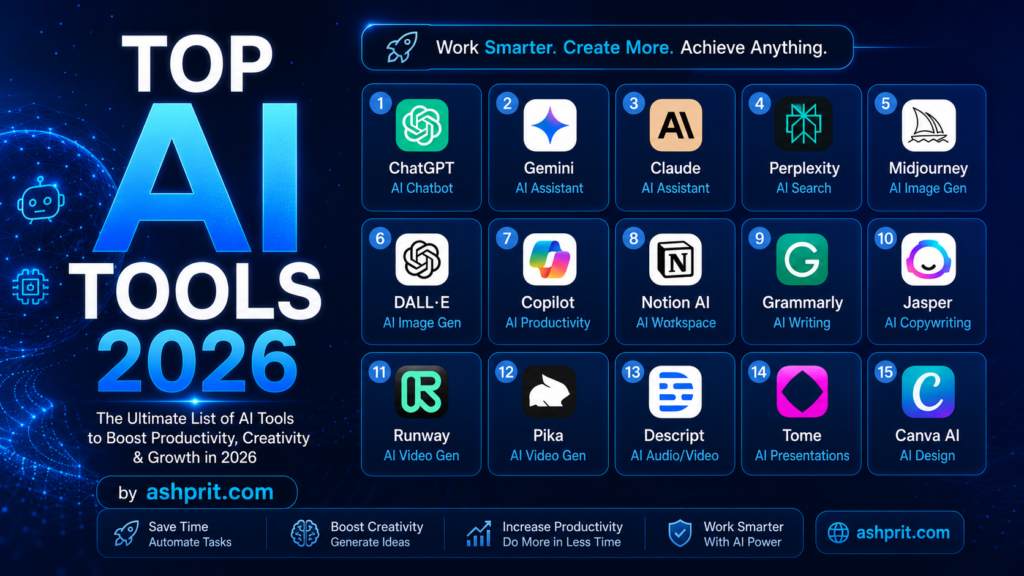
Many tools now support AI Agent workflows.
Here are some of the most popular options.
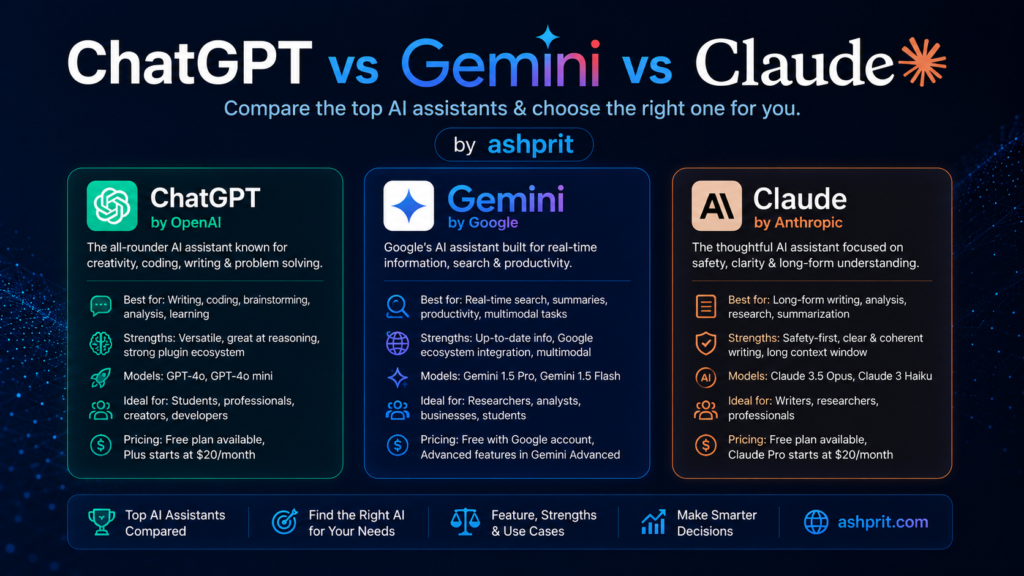
ChatGPT
ChatGPT is one of the most widely used AI platforms.
It helps with:
- Research
- Writing
- Problem solving
- Productivity
Claude
Claude is known for strong reasoning and long-context understanding.
It is often used for:
- Analysis
- Documentation
- Complex projects
Perplexity
Perplexity combines AI responses with citations.
It is particularly useful for research.
AutoGPT
AutoGPT focuses on autonomous task execution.
Users provide goals, and the system works toward achieving them.
CrewAI
CrewAI allows multiple AI Agents to collaborate.
Different agents can handle specialized tasks.
LangGraph
LangGraph helps developers build advanced AI Agent workflows.
It is popular for enterprise applications.
n8n
n8n combines automation and AI capabilities.
It allows users to create workflows connecting multiple tools and services.
The Future of AI Agents
AI Agents are still in the early stages of adoption.
However, their impact is already visible.
Over the next few years, AI Agents are expected to become:
- More capable
- More reliable
- More autonomous
Businesses will increasingly rely on AI Agents to manage routine tasks.
Creators will use AI Agents to scale content production.
Developers will integrate AI Agents into applications and workflows.
AI Agents as Digital Employees
Some experts believe AI Agents will eventually function like digital employees.
Rather than completing a single task, they may manage entire workflows.
Examples include:
- Marketing assistants
- Research assistants
- Customer support assistants
- Administrative assistants
This could transform how organizations operate.
Human + AI Collaboration
Despite rapid progress, AI Agents are unlikely to replace humans completely.
The most effective approach is collaboration.
Humans provide:
- Creativity
- Judgment
- Strategy
- Experience
AI Agents provide:
- Speed
- Automation
- Analysis
- Execution
Together, they create powerful results.
Frequently Asked Questions
What is an AI Agent?
An AI Agent is a software system that can pursue goals, make decisions, use tools, and complete tasks with limited human supervision.
Are AI Agents different from ChatGPT?
Yes.
Traditional chatbots primarily respond to prompts, while AI Agents can plan actions and perform multi-step workflows.
Can AI Agents work without human supervision?
Some AI Agents can operate with limited supervision, but human oversight is still recommended for important tasks.
What are the best AI Agent tools?
Popular options include:
- ChatGPT
- Claude
- Perplexity
- AutoGPT
- CrewAI
- LangGraph
- n8n
Are AI Agents safe?
AI Agents can be safe when used responsibly, but users should consider privacy, security, and accuracy.
Can beginners use AI Agents?
Yes.
Many AI Agent tools are designed for beginners and require little technical knowledge.
How do AI Agents help businesses?
AI Agents improve productivity by automating repetitive tasks and supporting decision-making.
Do AI Agents replace employees?
AI Agents are more likely to assist employees rather than completely replace them.
What industries benefit from AI Agents?
Industries including marketing, sales, customer support, software development, education, and healthcare can benefit from AI Agents.
Are AI Agents the future of automation?
Many experts believe AI Agents will play a major role in the future of automation because they combine intelligence with workflow execution.
Final Thoughts
AI Agents are more than just another technology trend.
They represent a major shift in how people interact with software and automation systems.
Instead of simply asking AI for answers, users can now delegate tasks, automate workflows, and improve productivity through intelligent systems that can plan and act.
For businesses, creators, developers, and professionals, understanding AI Agents is becoming increasingly important.
Those who learn how to use AI Agents effectively today will be better prepared for the future of work and automation.
Also Read
If you’re interested in AI-powered search and optimization, explore these guides:
- What Is AEO (Answer Engine Optimization)?
- What Is GEO (Generative Engine Optimization)?
Together, AEO, GEO, SEO, and AI Agents represent some of the most important trends shaping the future of digital growth.
About Ashprit
Ashprit provides practical guides on AI, SEO, AEO, GEO, automation, programming, and digital growth.
Our mission is to help creators, marketers, freelancers, and businesses understand emerging technologies and apply them in real-world situations.
Whether you’re exploring AI Agents, optimizing for AI search, or building automation workflows, Ashprit aims to provide clear, actionable, and beginner-friendly insights.
Learn more about AI research from OpenAI:
Explore Google’s AI initiatives:

Pingback: Perplexity AI Review 2026: Is It Better Than ChatGPT for Research?
Pingback: Best AI Writing Tools 2026 (Free & Paid) | Complete Guide
Pingback: Best AI Automation Tools 2026 (Free & Paid) – Complete Guide